The short answer
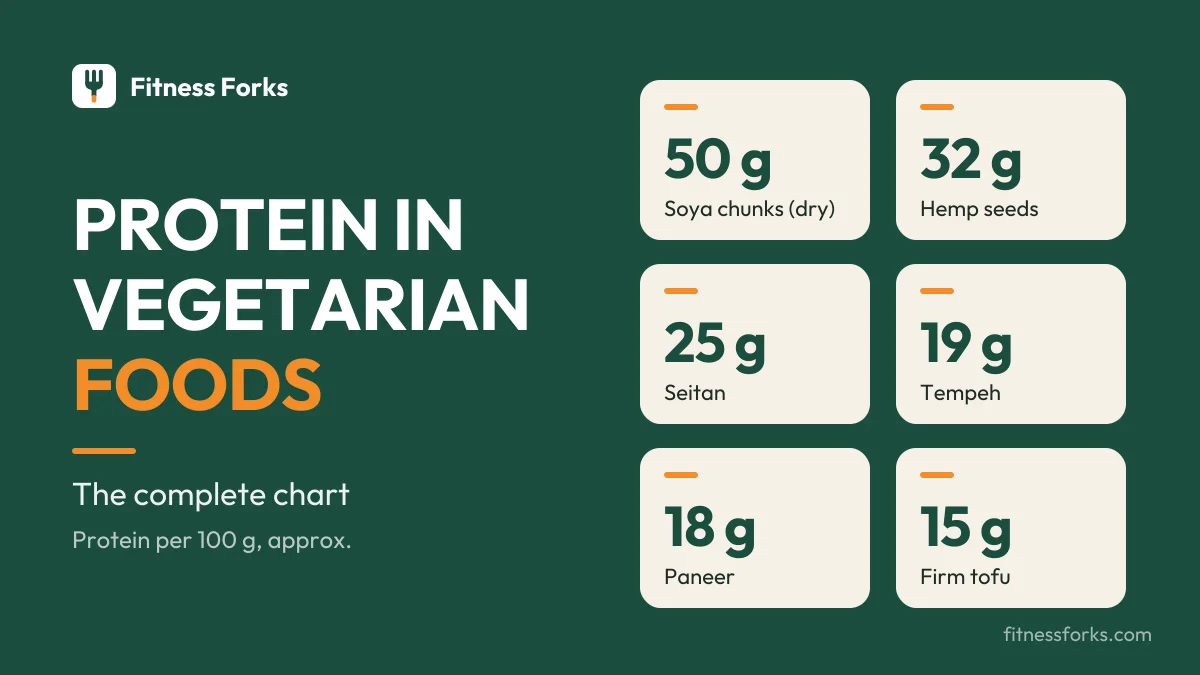
The best vegetarian protein sources per 100 g are textured soy protein (TVP or soya chunks), seeds like hemp and pumpkin, seitan, peanuts, cheese, tempeh and paneer. For everyday meals, tofu, Greek yogurt, cottage cheese, eggs, lentils and beans do most of the work because you eat them in larger portions.
One detail changes everything: beans, lentils and grains lose about two-thirds of their protein per 100 g once cooked, because they soak up water. Always check whether a number refers to dry or cooked food.
The vegetarian protein chart
Values are approximate and based on USDA FoodData Central. Brands vary, so check the label on packaged foods.
| Food | Protein per 100 g | Typical serving | Protein per serving |
|---|---|---|---|
| Textured soy protein / soya chunks (dry) | 50 g | 25 g (0.9 oz) dry | 12.5 g |
| Hemp seeds | 32 g | 3 tbsp (30 g) | 9.5 g |
| Pumpkin seeds | 30 g | 1 oz (28 g) | 8.5 g |
| Peanuts | 26 g | 1 oz (28 g) | 7 g |
| Seitan | 25 g | 3 oz (85 g) | 21 g |
| Peanut butter | 25 g | 2 tbsp (32 g) | 8 g |
| Cheddar cheese | 25 g | 1 oz (28 g) | 7 g |
| Almonds | 21 g | 1 oz (28 g) | 6 g |
| Tempeh | 19 g | 100 g (3.5 oz) | 19 g |
| Paneer | 18 g | 100 g (3.5 oz) | 18 g |
| Chia seeds | 17 g | 2 tbsp (24 g) | 4 g |
| Firm tofu | 15 g | 150 g (5.3 oz) | 22.5 g |
| Oats (dry) | 13 g | 40 g (½ cup) | 5 g |
| Eggs | 12.5 g | 2 large eggs | 12.5 g |
| Cottage cheese (low-fat) | 11 g | 1 cup (226 g) | 25 g |
| Edamame (shelled, cooked) | 11 g | 1 cup (155 g) | 18 g |
| Greek yogurt (plain, non-fat) | 10 g | 200 g (¾ cup) | 20 g |
| Lentils (cooked) | 9 g | 1 cup (198 g) | 18 g |
| Black beans (cooked) | 9 g | 1 cup (172 g) | 15 g |
| Chickpeas (cooked) | 9 g | 1 cup (164 g) | 14.5 g |
| Quinoa (cooked) | 4.4 g | 1 cup (185 g) | 8 g |
| Milk (dairy) | 3.3 g per 100 ml | 1 cup (240 ml) | 8 g |
The per-serving column matters more than the per-100 g column. You rarely eat 100 g of hemp seeds, but a cup of cottage cheese or lentils is a normal portion.
Dry vs cooked: the mistake that skews every count
Many charts list lentils at 25 g of protein per 100 g. That is true for dry lentils straight from the bag. When you cook 100 g of dry lentils, they absorb water and weigh roughly 250 to 300 g. The protein doesn’t change, but it is now spread over more weight, so cooked lentils come out at about 9 g per 100 g.
The same applies to chickpeas, beans, quinoa, rice and oats. If you track your food, either weigh it dry before cooking or use the cooked values from the chart. Mixing the two is the most common reason people think they are eating far more protein than they are.
Complete and incomplete proteins
Protein is made of building blocks called amino acids, and nine of them must come from food. A “complete” protein contains all nine in useful amounts.
- Complete on their own: eggs, dairy (milk, yogurt, cheese, paneer, cottage cheese), soy foods (tofu, tempeh, edamame, TVP) and quinoa.
- Lower in one or more amino acids: most beans and lentils (lower in methionine) and most grains and seitan (lower in lysine).
The good news is that you don’t need to combine them at every meal. Eating a mix of beans, grains, nuts, seeds and soy across the day gives your body everything it needs. Classic pairings like rice and beans, hummus and pita, or dal and roti work for exactly this reason.
Easy ways to add more protein
- Swap regular yogurt for Greek yogurt or skyr. It has roughly twice the protein per spoonful.
- Add a cup of lentils or beans to soups, salads and pasta sauces.
- Use firm tofu or tempeh in stir-fries instead of extra vegetables or noodles alone.
- Sprinkle 2 to 3 tablespoons of hemp or pumpkin seeds on oats, salads or yogurt.
- Keep roasted chickpeas, edamame or a handful of peanuts as snacks.
- Mix cottage cheese into scrambled eggs or blend it into pancake batter.
- Stir rehydrated soya chunks or TVP into chili, curries or tacos in place of some of the vegetables.
What a 100 g vegetarian protein day looks like
Here is one way the chart turns into a normal day of eating. It includes dairy and eggs; a fully plant-based version would lean more on tofu, tempeh, seitan and soy milk.
| Meal | What you eat | Protein (approx.) |
|---|---|---|
| Breakfast | 200 g Greek yogurt, 40 g oats, 3 tbsp hemp seeds | 34.5 g |
| Lunch | 1 cup cooked lentils in a salad, 1 whole-wheat pita | 24 g |
| Snack | 2 boiled eggs | 12 g |
| Dinner | 150 g firm tofu stir-fry with 1 cup cooked quinoa | 30.5 g |
| Total | 101 g |
To work out how much protein you personally need, see our guide on how much protein you need a day.
Common questions
Is it hard to get enough protein as a vegetarian? Not if you plan your main meals around a protein source. Most shortfalls come from meals built mostly on bread, rice or pasta with only a small side of beans or cheese.
Is soy safe to eat every day? For most healthy people, regular amounts of soy foods as part of a varied diet are considered safe. If you have a thyroid condition or another medical concern, ask your doctor.
Are plant proteins as good as animal proteins for building muscle? Plant proteins can support muscle growth when you eat enough in total and include a variety of sources. Soy is one of the strongest plant options.
Do I need protein powder? No. It is a convenient extra, not a requirement. The foods in this chart can cover most people’s needs.
The bottom line
Vegetarians have plenty of high-protein options. Build each meal around one good source from the chart, watch the difference between dry and cooked weights, and use seeds, yogurt and legumes to top up the rest of the day.
Disclaimer: This article is for general information only and is not medical or dietary advice. Please consult a qualified doctor or registered dietitian before making significant changes to your diet, especially if you have a health condition.