The short answer
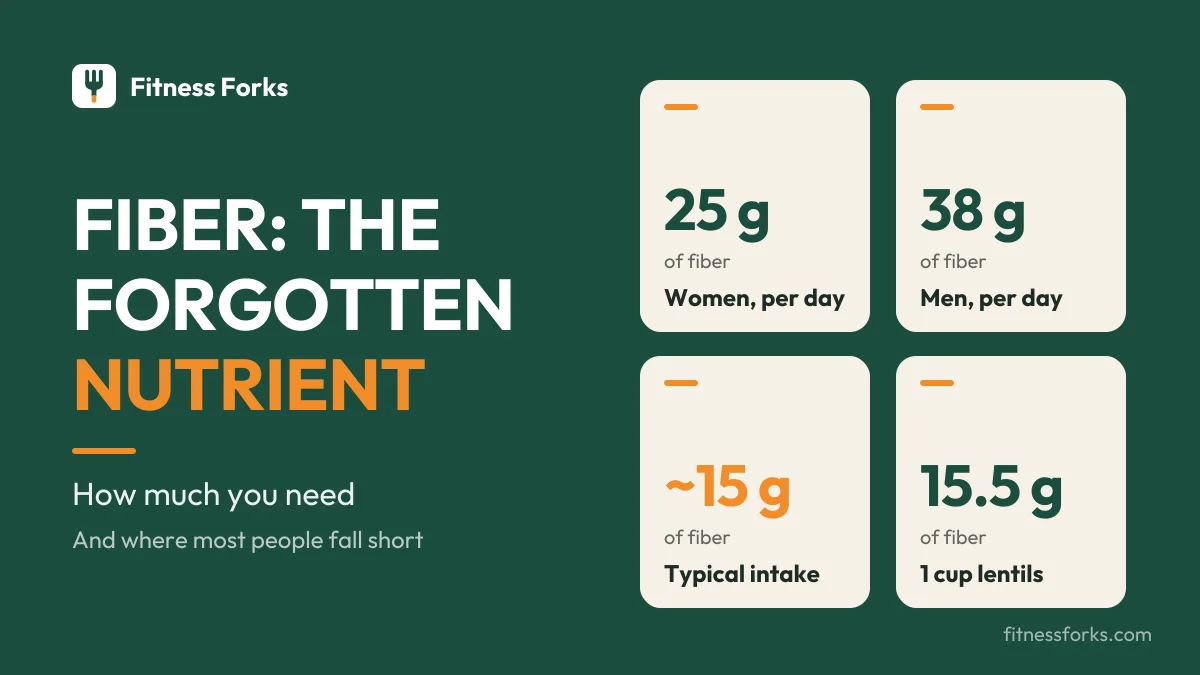
Most adults should aim for 25 to 38 g of fiber a day, depending on age and sex. Most people eat around half of that. Gym-goers are often worse off than average, because high-protein diets built on chicken, eggs, whey and white rice contain almost no fiber at all.
Fiber won’t build muscle directly. But it keeps you full on fewer calories, keeps digestion regular when protein intake is high, and is one of the most consistent links to long-term heart and metabolic health.
How much do you need?
US guidelines are based on 14 g of fiber for every 1,000 calories you eat. Other countries set similar targets.
| Who | Daily fiber target |
|---|---|
| Women, 19 to 50 (US) | 25 g |
| Men, 19 to 50 (US) | 38 g |
| Women, 51 and over (US) | 21 g |
| Men, 51 and over (US) | 30 g |
| All adults (UK) | 30 g |
The gap is large. A 2021 analysis of US national survey data found that only about 5% of men and 9% of women reach the recommended amount.
If you’d rather have one number, 30 g a day is a sensible target for most adults.
Why it matters if you train
- Fullness on fewer calories. Fiber adds bulk and slows digestion, so high-fiber meals keep you satisfied longer. That matters most when you are trying to lose fat.
- Steadier energy. Fiber slows how quickly carbohydrates reach your bloodstream, which helps avoid the energy crash after a big meal.
- Digestive comfort on a high-protein diet. Protein-heavy diets with little fiber are a common cause of constipation.
- Long-term health. Higher fiber intake is consistently linked with lower risk of heart disease, type 2 diabetes and bowel cancer in large studies.
There are two main types. Soluble fiber (oats, beans, lentils, apples, chia) forms a gel and helps with cholesterol and blood sugar. Insoluble fiber (whole grains, nuts, vegetable skins) adds bulk and keeps things moving. Most high-fiber foods contain both, so you don’t need to track them separately.
12 foods high in both fiber and protein
These foods help you hit both targets at once. Values are approximate, based on USDA FoodData Central.
| Food | Serving | Fiber | Protein |
|---|---|---|---|
| Split peas (cooked) | 1 cup (196 g) | 16 g | 16 g |
| Lentils (cooked) | 1 cup (198 g) | 15.5 g | 18 g |
| Black beans (cooked) | 1 cup (172 g) | 15 g | 15 g |
| Chickpeas (cooked) | 1 cup (164 g) | 12.5 g | 14.5 g |
| Kidney beans (cooked) | 1 cup (177 g) | 11 g | 15 g |
| Green peas (cooked) | 1 cup (160 g) | 9 g | 8.5 g |
| Edamame (shelled, cooked) | 1 cup (155 g) | 8 g | 18 g |
| Chia seeds | 2 tbsp (24 g) | 8 g | 4 g |
| Whole-wheat pasta (cooked) | 1 cup (140 g) | 6 g | 7.5 g |
| Quinoa (cooked) | 1 cup (185 g) | 5 g | 8 g |
| Oats (dry) | 40 g (½ cup) | 4 g | 5 g |
| Almonds | 1 oz (28 g) | 3.5 g | 6 g |
Beans, lentils and peas stand out. A single cup of lentils covers more than half of most people’s daily fiber and a good share of their protein.
A typical gym day vs a fiber-upgraded day
The same meals, with a few swaps. Protein stays high; fiber goes from about 6 g to about 40 g.
| Meal | Typical gym day | Fiber | Upgraded day | Fiber |
|---|---|---|---|---|
| Breakfast | 3 eggs, 2 slices white toast | 1.5 g | 3 eggs, 2 slices whole-grain toast, 1 apple | 8.5 g |
| Lunch | Chicken or tofu, 1 cup white rice, small salad | 2 g | Chicken or tofu, 1 cup brown rice, ½ cup black beans, large salad | 14 g |
| Snack | Protein shake | 0 g | Protein shake blended with 2 tbsp chia seeds | 8 g |
| Dinner | Paneer or fish, 1 cup white rice, a few vegetables | 2.5 g | Paneer or fish, 1 cup quinoa, 1 cup broccoli | 10 g |
| Total | 6 g | 40.5 g |
None of the swaps change the meal much. They replace refined grains with whole ones, add a fruit, and add beans or seeds to meals you already eat.
How to add fiber without stomach trouble
Jumping from 6 g to 40 g overnight is a recipe for bloating and gas. Your gut bacteria need time to adjust. Increase gradually over about a month:
| Week | What to change | Roughly added |
|---|---|---|
| 1 | Swap white bread and rice for whole-grain versions | +5 g |
| 2 | Add one piece of fruit or a cup of vegetables a day | +5 g |
| 3 | Add half a cup of beans or lentils to one meal a day | +7 g |
| 4 | Add seeds (chia, flax) or oats to breakfast | +5 g |
Two habits make the change much easier:
- Drink more water. Fiber absorbs water. Without enough fluid, more fiber can make constipation worse, not better.
- Spread it across the day. A little at each meal is easier on your stomach than one huge high-fiber dinner.
If you have IBS, inflammatory bowel disease or another digestive condition, talk to your doctor or a dietitian before making big changes. Some high-fiber foods can trigger symptoms.
Common questions
Are fiber supplements as good as food? Supplements such as psyllium can help if you struggle to eat enough, but whole foods bring vitamins, minerals and other plant compounds that supplements don’t. Use them as a backup, not a replacement.
Can you eat too much fiber? Very high amounts, especially added suddenly, can cause bloating, gas and discomfort. Within the ranges in this article, it’s rarely a problem for healthy adults.
Do protein bars with added fiber count? They count toward the total, but many use isolated fibers like chicory root (inulin), which cause gas in some people. Whole foods are a more reliable source.
Does cooking destroy fiber? No. Cooking softens fiber but doesn’t remove it. Juicing does remove most of it, so whole fruit beats juice.
The bottom line
Aim for around 25 to 38 g of fiber a day. High-protein diets often fall far short. Beans, lentils, whole grains, fruit, vegetables and seeds close the gap quickly, and they bring protein with them. Increase slowly, drink enough water, and let your gut adjust over a few weeks.
Disclaimer: This article is for general information only and is not medical or dietary advice. Please consult a qualified doctor or registered dietitian before making significant changes to your diet, especially if you have a digestive or other health condition.