The short answer
Macros, short for macronutrients, are the three nutrients your body needs in large amounts: protein, carbohydrates and fat. Every calorie you eat comes from one of them (or from alcohol).
You don’t need to count them to eat well. But knowing what each one does, and roughly how much is on your plate, makes it much easier to eat for your goals, whether that’s building muscle, losing fat or simply having more energy.
What each macro does
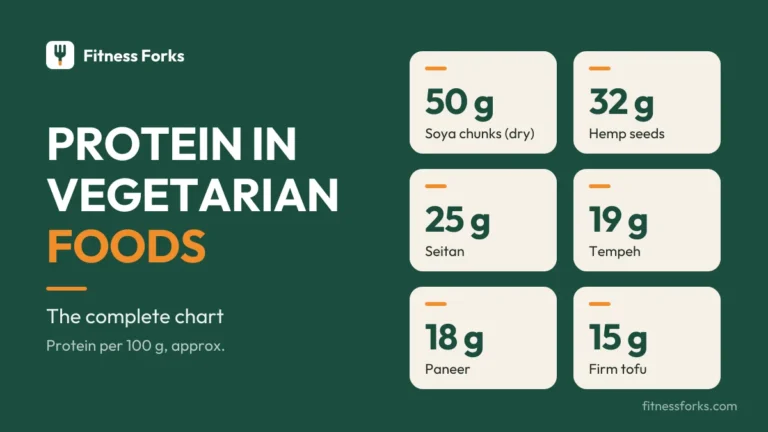
Protein builds and repairs muscle, skin, hair and enzymes. It is also the most filling of the three, which helps with appetite control. Main sources: eggs, dairy, tofu, tempeh, beans, lentils, fish and meat.
Carbohydrates are your body’s preferred fuel, especially for your brain and for hard exercise. They include sugars, starches and fiber. Main sources: grains, bread, rice, pasta, potatoes, fruit, beans and vegetables.
Fat supports hormones, helps you absorb vitamins A, D, E and K, and provides long-lasting energy. Main sources: oils, nuts, seeds, avocado, cheese and oily fish.
All three matter. Diets that cut one out completely can work for some people, but they are harder to sustain and easier to get wrong.
Calories per gram
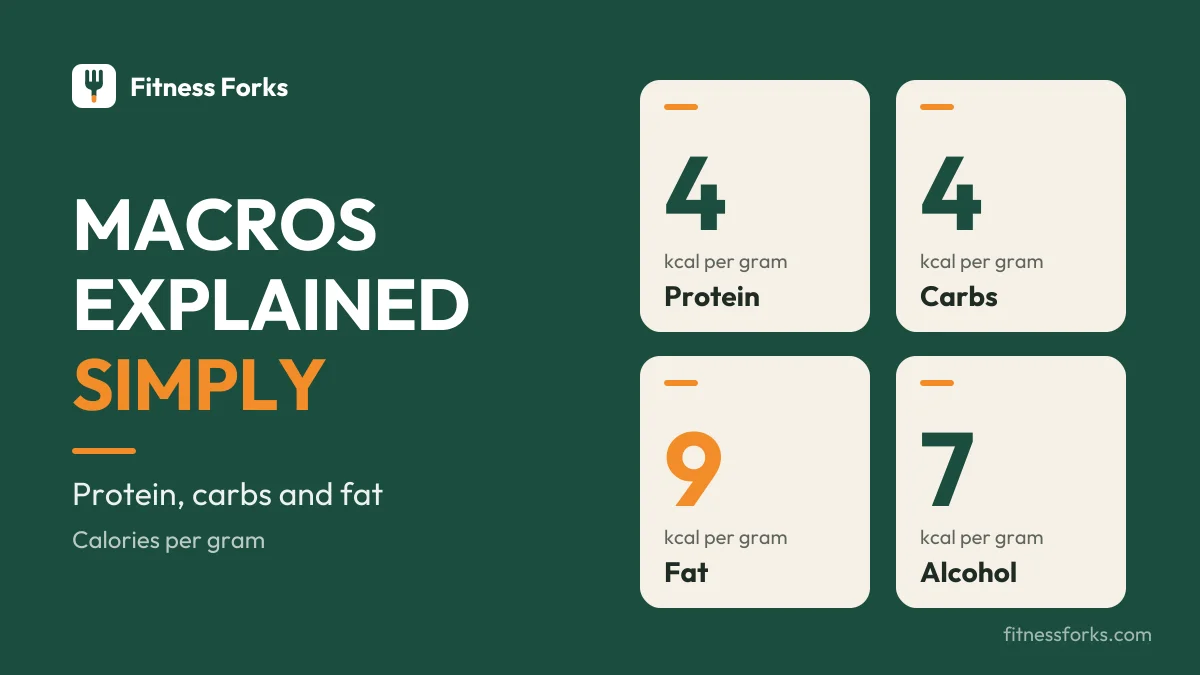
The macros don’t carry the same energy. Fat has more than twice the calories of protein or carbs per gram.
| Macro | Calories per gram |
|---|---|
| Protein | 4 |
| Carbohydrates | 4 |
| Fat | 9 |
| Alcohol (not a macro, but still counts) | 7 |
This is why a tablespoon of oil (about 14 g of fat) adds around 120 calories, while a whole cup of cooked broccoli adds about 55.
For general health, US guidelines suggest getting 45 to 65% of calories from carbs, 20 to 35% from fat and 10 to 35% from protein. That is a wide range on purpose: many different eating styles fit inside it.
On a 2,000-calorie day, a balanced split might look like this:
| Macro | Share of calories | Calories | Grams |
|---|---|---|---|
| Protein | 25% | 500 | 125 g |
| Carbohydrates | 45% | 900 | 225 g |
| Fat | 30% | 600 | 67 g |
One plate, broken down
Here is a simple tofu stir-fry with rice, split into its macros. Values are approximate.
| Ingredient | Protein | Carbs | Fat | Calories |
|---|---|---|---|---|
| 150 g (5.3 oz) firm tofu | 22.5 g | 3 g | 13 g | 219 |
| 1 cup (158 g) cooked white rice | 4 g | 45 g | 0.5 g | 205 |
| 150 g (5.3 oz) mixed stir-fry vegetables | 3 g | 10 g | 0 g | 52 |
| 1 tbsp cooking oil | 0 g | 0 g | 14 g | 126 |
| Total | 29.5 g | 58 g | 27.5 g | about 600 |
Two things stand out. The single tablespoon of oil adds almost as many calories as the whole cup of rice. And the tofu, not the rice or vegetables, supplies three-quarters of the protein. That is what macros are useful for: seeing where the numbers on your plate actually come from.
Do you need to count macros?
Most people don’t. Counting can be useful for a few weeks to learn what your usual meals contain, or if you have a specific goal like competing or a strict fat-loss phase. Many people find it tiring to do long term.
There are three practical levels:
- No counting. Use the plate method below at every meal. This is enough for most people.
- Protein only. Track just your protein to make sure you hit your daily target, and let carbs and fat fall where they do.
- Full tracking. Log all three macros in an app for a set period, then return to level 1 or 2 once you know your portions.
A simple plate method
If you don’t want to count, build each main meal like this:
- Half the plate: vegetables or salad
- A quarter: a protein source, about the size of your palm (tofu, eggs, paneer, beans, fish, chicken)
- A quarter: a carb source, about the size of your fist (rice, pasta, bread, potatoes, quinoa)
- A thumb-sized amount: fat (oil, butter, nuts, cheese, avocado)
If you train hard or want to gain muscle, increase the protein and carb portions. If you’re trying to lose fat, keep the vegetables generous and be careful with the fat portion, since it is the most calorie-dense.
Common macro myths
“Carbs make you fat.” Weight gain comes from eating more calories than you burn over time, from any source. Carbs are easy to overeat in some forms (sweets, pastries, sugary drinks), but whole-food carbs like oats, beans, fruit and potatoes are filling and fit well in a fat-loss diet.
“Eating fat makes you fat.” Fat is calorie-dense, so portions matter, but it is essential for health. Nuts, olive oil, seeds and avocado are linked with good health outcomes in long-term studies.
“You need to hit your macros exactly every day.” Your body works on averages over days and weeks. Being 10 g over or under on a given day makes no meaningful difference.
“There is one perfect macro ratio.” Different splits work for different people. The best ratio is one you can stick to while meeting your protein needs and eating mostly whole foods.
Common questions
What macros should I eat to lose fat? Total calories matter most. Within that, keeping protein high (about 1.6 g per kg of body weight) helps preserve muscle and keeps you fuller.
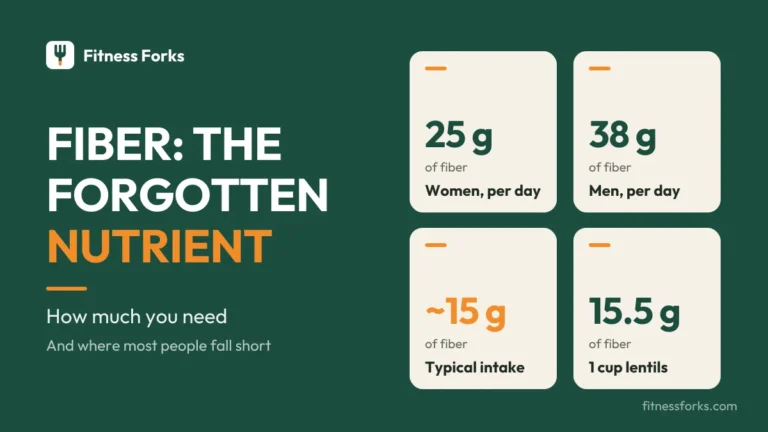
Is fiber a macro? Fiber is a type of carbohydrate. It’s counted in total carbs on most nutrition labels, though your body gets fewer calories from it than from sugar or starch.
What about micronutrients? Micronutrients are vitamins and minerals, needed in much smaller amounts. Getting your macros from whole foods usually brings plenty of micronutrients with them.
Which app should I use to track? Any reputable tracking app works. Choose one with a large, verified food database, and check entries against food labels.
The bottom line
Protein builds, carbs fuel, fat supports. Each gram of protein or carbs carries 4 calories, and each gram of fat carries 9. You don’t need to count forever: learn roughly what’s on your plate, keep protein steady, and use the plate method for everyday meals.
Disclaimer: This article is for general information only and is not medical or dietary advice. Please consult a qualified doctor or registered dietitian before making significant changes to your diet, especially if you have a health condition.